FRANKFORT — Kentucky may soon be eligible for a new federal educational tax credit program.
The Kentucky House of Representatives voted 79-17 with one abstention on House Bill 1 on Tuesday. The legislation would pave the way for Kentucky to opt into an educational funding program established in House Resolution 1 – or the One Big Beautiful Bill Act – in Congress last year.
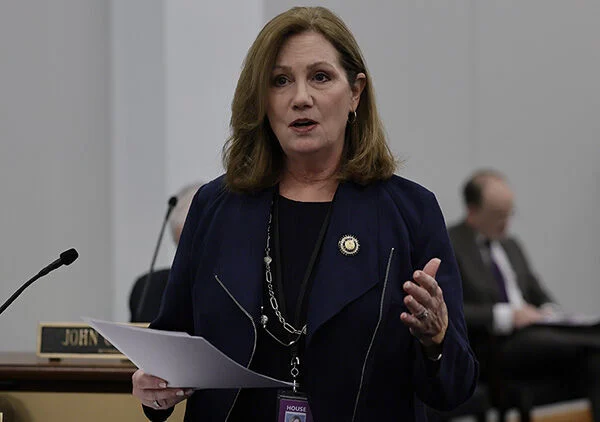
Rep. Kimberly Poore Moser, R-Taylor Mill, is the primary sponsor of the legislation. She said the bill would ensure Kentuckians don’t miss out on a federally-funded opportunity.
“This measure would provide a significant tool for public schools to harness a federal tax credit to assist families and children access school resources,” Moser said. “It affirms our commitment to expanding educational opportunities and improving student outcomes.”
Under HB 1, Kentucky would be eligible to participate in the qualified elementary and secondary education scholarship federal tax credit program for individuals who make a qualifying contribution to a scholarship granting organization, or SGO.
The legislation would grant Kentucky’s Secretary of State the authority to opt-in to the program on behalf of the commonwealth and oversee Kentucky’s participation. Under federal law, qualified participants could receive up to a $1,700 tax credit on donations to an SGO annually beginning in 2027.
On the House floor, Moser said if Kentucky does not choose to opt-in, schools in other states will benefit from money that could be going to a local SGO instead.
“Under this model, public schools could establish their own independent scholarship granting organizations to collect donations, just as they do with other nonprofits like PTO or athletic boosters to administer SGO funds,” Moser said.
SGO funds cannot be used for tuition, but SGO dollars could fund other scholarship opportunities for students in public, private and homeschool settings. The scholarships can be used for fees, tutoring, technology, transportation, special needs programs, instructional materials, school supplies and more, Moser said.
“(HR 1) sets clear guidelines for how the funds are used – at least 90% of the contributions must be awarded as scholarships to students,” Moser said. “This really prioritizes supporting middle- and low-income households.”
Moser said HB 1 is constitutional under state law since the legislation does not allocate any state public dollars to fund SGO accounts.
If passed, Kentucky would join 27 other states that have opted in to the program so far.
Rep. T.J. Roberts, R-Burlington, is a primary co-sponsor of the legislation. He said HB 1 is about the average Kentuckian, and he doesn’t want Kentucky students to miss out on this opportunity.
“There are students with special needs, there are students who don’t have the same learning style as myself – House Bill 1 looks out for them and puts the Kentucky students first and ensures that we are capable of providing the best opportunities for every student regardless of their income,” he said.
The House debated HB 1 for an hour Tuesday, with several lawmakers sharing concerns the legislation will ultimately lead to less funding for public education.
Rep. Mary Lou Marzian, D-Louisville, said she worries opting in to the federal program will lead to public dollars being used to fund private schools more so than public schools.
“The fear that this is the road to vouchers and charter (schools) is really a slap in the face to our teachers, our classified staff, who often work just for a paycheck for their health insurance,” she said. “… I would love to take a step back and see what the full cost of this could be and how much money it’s going to put in the pockets of the very wealthy.”
House Speaker Pro Tempore David Meade, R-Stanford, said HB 1 is not about private schools.
“This is a chance to get more funding in public education” he said, adding he wants his public schools in his district to benefit from this opportunity.
Other lawmakers said they were also voting for HB 1 for public schools in their communities.
Rep. Chris Fugate, R-Chavies, said his Eastern Kentucky district is home to one of the poorest counties in the country: Owsley County. He said he plans to help Owsley County start an SGO if HB 1 becomes law.
“My understanding is this is to help the poorest of the poor,” Fugate said. “There are no big private schools in Owsley County.”
In explaining her vote on HB 1, Rep. Tina Bojanowski, D-Louisville, said she struggled to decide whether to vote yes or no on the legislation. She ultimately decided to vote yes with the commitment to help public schools in her district as well.
“It’s a really, really hard vote for me,” she said. “But I believe in my heart and soul that this will help public education students. So I’m going to stick with the yes, because I’m going to do everything that I can to ensure that we have scholarship granting organizations that help public education students and students with disabilities.”
HB 1 is now before the Senate for consideration.